

Toyota 5VZ-FE 3.4L V6: Full Specs, Common Issues & TRD Supercharger
Rob Krause, Owner & Lead Printer, Battle Born Clothing & Print · Yerington, Nevada · Updated April 2026
When Toyota replaced the 3VZ-E V6 in 1995, the engine that took its place would go on to power the entire first-generation Tacoma, the third-generation 4Runner, the T100 pickup, the first-generation Tundra, and Land Cruiser Prados across the world. That engine was the 5VZ-FE: a 3.4-liter DOHC V6 with a cast-iron block, non-interference valvetrain, and a reputation for outlasting the trucks it was bolted into.
This is the 5VZ-FE guide we would want if we were shopping a first-gen Tacoma, diagnosing a coolant smell, or weighing a TRD supercharger against a modern V6 swap. Full factory specs, common failure points, the cooling system issues every 5VZ-FE owner should know about, and the real reason these engines routinely cross 300,000 miles.
A Brief History of the 5VZ-FE
The 5VZ-FE debuted in 1995 as part of Toyota's VZ engine family. It replaced the older 3VZ-E V6, which had earned a mixed reliability reputation. By bumping displacement from 3.0 liters to 3.4 liters and adding dual overhead cams with 24 valves, Toyota produced an engine that was both more powerful and more reliable than its predecessor. The 5VZ-FE arrived at exactly the right moment: the all-new first-generation Tacoma needed a V6, the third-generation 4Runner needed a V6, and the first Tundra needed a V6. One engine answered for all three.
Production ran from 1995 to 2004 in North America, with international-market production continuing longer in the Hilux and Prado. The 5VZ-FE was manufactured at Toyota's Tahara plant in Aichi, Japan. In 2004 it was phased out of the Tacoma in favor of the newer 4.0-liter 1GR-FE V6, but the 5VZ-FE's simpler, cast-iron design has kept it a favorite among off-road enthusiasts who value reliability over horsepower. For the 4-cylinder companion engine that ran alongside the 5VZ-FE in the same Tacoma and 4Runner generation, see our 3RZ-FE 2.7L engine guide.
Factory Specifications
| Specification | 5VZ-FE |
|---|---|
| Production years | 1995 to 2004 (North America) |
| Production plant | Toyota Tahara Plant, Aichi, Japan |
| Displacement | 3.4L (3,378 cc) |
| Configuration | 60-degree V6, DOHC, 24-valve |
| Block material | Cast iron |
| Head material | Aluminum alloy |
| Bore x stroke | 93.5 mm x 82 mm |
| Compression ratio | 9.6:1 |
| Fuel delivery | Multi-port EFI with Toyota DIS ignition |
| Valvetrain | Timing belt, shim-over-bucket, non-interference |
| Horsepower | 183 to 190 hp at 4,800 rpm |
| Torque | 217 to 220 lb-ft at 3,600 rpm |
| Firing order | 1-2-3-4-5-6 |
| Engine weight | ~440 lb (200 kg) |
The 5VZ-FE's flat torque curve is its signature characteristic. Peak torque arrives at 3,600 rpm, but 90% of that torque is available from about 2,200 rpm upward. In a 4,000-pound Tacoma or 4Runner, that means the engine pulls cleanly from low revs without needing to be wound out. It's a towing-friendly power curve masquerading as a sports-truck engine.
|
Shop The Gear
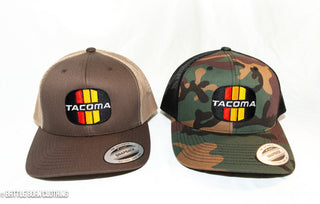
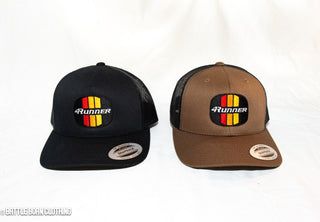
1st-Gen Tacoma & 3rd-Gen 4Runner Heritage
Embroidered in Yerington, Nevada. No minimums. Same-day quotes on custom orders.
|
|||
|
|||
| Shop Tacoma Collection Shop 4Runner Collection |
Which Toyota Vehicles Used the 5VZ-FE?
| Vehicle | Years | Notes |
|---|---|---|
| Toyota Tacoma (1st Gen) | 1995 to 2004 | V6 upgrade over the base 3RZ-FE 4-cylinder trim. |
| Toyota 4Runner (3rd Gen) | 1996 to 2002 | V6 trim. The 3.4L is the most sought-after 3rd-gen 4Runner engine. |
| Toyota T100 | 1995 to 1998 | Full-size pickup that preceded the Tundra. |
| Toyota Tundra (1st Gen) | 2000 to 2004 | Base V6 trim. V8 upgrade was the 2UZ-FE. |
| Toyota Hilux | 1997 to 2005 | International markets. |
| Toyota Land Cruiser Prado (J90) | 1996 to 2002 | International markets. V6 variant of the J90 Prado. |
The V8 sibling that ran alongside the 5VZ-FE in the Tundra and 4Runner is the 2UZ-FE 4.7L V8 guide. For the 4-cylinder base engine in the Tacoma and 4Runner, see our 3RZ-FE 2.7L guide. For the bigger Land Cruiser lineage, read the 1FZ-FE inline-six guide.
The TRD Supercharger Option
For owners who wanted V8-level power from the V6, Toyota Racing Development offered a factory-supported supercharger kit. The TRD kit was a Roots-type blower running at about 8 PSI of boost, and it pushed the 5VZ-FE from 183 hp to around 260 hp and 260 lb-ft of torque. The supercharger kit was engineered specifically for the 5VZ-FE's forged crankshaft and sintered connecting rods, which could handle the added cylinder pressure without modification.
TRD-supercharged 5VZ-FE engines are now highly sought-after in the first-gen Tacoma and third-gen 4Runner community. Complete, documented kits with all supporting hardware routinely trade for $2,500 to $4,500 on enthusiast forums. If you are considering installing one today, the bigger question is availability: new kits are long out of production, and used kits require careful inspection of the supercharger snout bearings and all the supporting components.
"The 5VZ-FE is famous for being one of the most reliable engines Toyota ever built. With routine maintenance, it's not uncommon to see these engines crossing the 300,000-mile mark with original internals still intact. The cast-iron block and non-interference design are forgiving in ways that modern aluminum engines simply are not."
-- Technical overview from the Toyota VZ engine family Wikipedia page
For the full component breakdown, the engine-specs.net 5VZ-FE page is the most detailed technical reference available, including deep-skirt cast-iron block construction, 4-bearing crankshaft dimensions, and the forged-sintered connecting rod specs. The Motor Reviewer 5VZ-FE analysis covers the practical owner-experience side including the TRD supercharger upgrade path with Eaton M62 blower specs.
Common 5VZ-FE Issues
The 5VZ-FE is one of Toyota's most reliable engines, but it is not without its quirks. Most of the common problems are preventive-maintenance issues, not design defects. Here is what to watch for:
- Timing belt interval: Toyota's recommended replacement interval is every 90,000 miles. The 5VZ-FE is a non-interference engine, so a snapped belt will not destroy the valvetrain, but you will be stranded. The water pump, tensioner, and idler pulleys should be replaced at the same service interval. Budget $800 to $1,200 at an independent shop.
- Radiator cross-contamination ("pink milkshake"): On automatic transmission models, the radiator has an integrated transmission cooler. When the internal barrier fails, coolant and transmission fluid mix, creating a pink, milky sludge. Many owners install an external transmission cooler and bypass the radiator loop entirely to prevent this failure mode.
- Valve cover gasket leaks: Very common past 150,000 miles. The rubber gaskets harden and begin seeping oil onto the exhaust manifolds, creating a burnt-oil smell and visible oil residue. Straightforward gasket replacement fixes it.
- Head gasket failure (overheat-induced): The 5VZ-FE does not have a head gasket design flaw, but any overheat event will kill the head gasket. Keep the cooling system in perfect order.
- Ignition coil packs: These can fail with age due to heat cycling, causing misfires and check engine lights. Affordable to replace, straightforward to diagnose with an OBD2 scanner.
- Knock sensor failures: Late-production 5VZ-FE engines occasionally experience knock sensor failures, which can trigger pulled timing and reduced power. Replacement requires removing the intake manifold.
None of these are show-stoppers. The cast-iron block and forged bottom end are nearly bulletproof. The engine does not fail from internal wear. It fails from external events (overheat, oil starvation) or from neglected maintenance.
Maintenance Schedule: Keep It Battle-Ready
- Oil changes: Every 5,000 miles with 5W-30 full synthetic. Capacity is about 5.4 quarts with filter. Mobil 1, Castrol Edge, or Pennzoil Platinum all work fine.
- Timing belt service: Every 90,000 miles, including the water pump, tensioner, idler pulleys, and drive belts. This is the single most important maintenance item on the 5VZ-FE.
- Coolant flush: Every 30,000 miles using Toyota Red (SLLC) long-life coolant. Inspect radiator hoses for swelling or cracks before every major off-road trip.
- Spark plugs: Every 30,000 miles. OEM spec is Denso K16R-U11 or NGK BKR5EYA-11 dual-ground electrode plugs. The 5VZ-FE is particular about spark plug specification. Do not substitute single-ground plugs.
- Transmission fluid: Every 60,000 miles. Toyota T-IV ATF for automatic transmissions.
- Air filter: Every 15,000 miles. More frequently if you run dusty off-road conditions.
- Fuel filter: Every 30,000 miles. Located in the engine bay on early models, in-tank on later models.
Where the 5VZ-FE Fits in Toyota's V6 Lineage
| Engine | Era | Peak Power | Notes |
|---|---|---|---|
| 3VZ-E 3.0L V6 | 1988 to 1995 | 150 hp | The engine the 5VZ-FE replaced. Known for head gasket issues. |
| 5VZ-FE 3.4L V6 (this guide) | 1995 to 2004 | 183 hp (260 hp supercharged) | Cast iron, non-interference, bulletproof. |
| 1GR-FE 4.0L V6 | 2005 to 2015 | 236 hp | Aluminum block, dual VVT-i, replaced the 5VZ-FE. |
| 2GR-FKS 3.5L V6 | 2016 to present | 278 hp | D-4S direct+port injection. Current 3rd-gen Tacoma V6. |
For a direct look at how the 5VZ-FE-powered first-generation Tacoma compares to modern Tacomas, see our 3rd vs 4th gen Tacoma comparison or our best Tacoma for overlanding guide. For the pickup-truck lineage that the 5VZ-FE helped define, read our Hilux and Tacoma deep-dive.
Buying a 5VZ-FE Tacoma or 4Runner: What to Check
- Timing belt history: Ask when the last timing belt service was done and whether the water pump was replaced at the same time. If the answer is "unknown" or "never," budget $1,000 for the job before you drive it home.
- Pink coolant or milky transmission fluid: Both are signs of radiator cross-contamination. If you see either, the transmission has likely already taken damage and needs a professional fluid exchange (possibly a full rebuild).
- Frame rust: First-gen Tacomas are famous for frame rot. Inspect the rear section, cab mounts, and leaf-spring hangers. Toyota issued a major frame recall on these trucks.
- Oil on the exhaust manifolds: Indicates leaking valve cover gaskets. Cosmetic more than catastrophic, but check how much oil the engine consumes.
- Cold-start behavior: Should fire cleanly within two rotations. Prolonged cranking suggests worn ignition components or early injector issues.
- TRD supercharger (if equipped): Ask for installation documentation, service history, and listen for whine or rattle from the supercharger snout. Bearing failures are expensive to fix.
Wear the Heritage
1st-gen Tacoma and 3rd-gen 4Runner owners are one of the most loyal communities in Toyota enthusiast culture. If you're keeping a 5VZ-FE-powered truck alive past 250,000 miles, you already understand the value of gear that lasts. Battle Born Clothing produces premium embroidered Toyota heritage apparel in-house in Yerington, Nevada. No minimums, same-day quotes on custom orders, and every piece built to outlast the truck it represents.
|
Shop The Gear
Built for 5VZ-FE Owners
Tacoma and 4Runner heritage caps, embroidered in Nevada.
|
|||
|
|||
| Shop Tacoma Collection Shop 4Runner Collection |
For the TRD supercharger crowd specifically, the TRD Pro Trucker Hat pays tribute to Toyota's factory performance arm. Or grab the Printed Retro 4Runner Hat if you're daily-driving a 3rd-gen. Browse the full Toyota hats collection for every TRD, TEQ, 3-bar, and heritage design in the lineup.
Frequently Asked Questions
The Bottom Line
The 5VZ-FE is the V6 engine for owners who understand that reliability and low cost-per-mile outrank peak horsepower. It is not fast by modern standards. It was never going to be fast. What it is is the engine that powered the most sought-after generation of Toyota trucks, and did it without breaking the chain of Toyota's reliability reputation. If you own a 1st-generation Tacoma, a 3rd-generation 4Runner, a first Tundra, or a T100 with this engine, you have one of the most durable V6s Toyota has ever built. Keep the timing belt on schedule, keep the cooling system healthy, and it will outlast the rest of the truck.
Born in Nevada. Built for the Grind.