

Toyota 3RZ-FE Engine Guide: 2.7L Specs, Reliability, Tacoma Power
When the 22R-E finally aged out in 1994, Toyota needed a replacement that kept the iron-block reliability reputation but addressed the elephant in the room: the old pushrod 4-cylinder made 116 horsepower in a world of increasingly heavy trucks. The answer was the 3RZ-FE, a 2.7-liter DOHC four-cylinder that would go on to power the first-generation Toyota Tacoma, the T100, the second-generation 4Runner in 4-cylinder trim, and Land Cruiser Prados across the globe for a full decade.
This is the 3RZ-FE guide we would want if we were about to buy a first-gen Tacoma, diagnose a valve tick, or figure out whether to keep the 4-cylinder or swap to a V6. Pulled from decades of TacomaWorld threads, factory service manuals, and real-world owner reports. Specs, horsepower, common failure points, valve adjustment intervals, and the upgrade paths that actually make sense.
Why the 3RZ-FE Replaced the 22R-E
The 22R and 22R-E had served Toyota for 14 years by 1995. Great engines, but they were pushrod 8-valve designs making 116 horsepower at best. By the mid-1990s, the Tacoma and 4Runner had grown heavier, safer, and better-equipped. The old engine could not keep up.
Toyota's engineers built the 3RZ-FE to solve that problem without throwing away the reliability playbook. The new engine kept the cast-iron block, added a DOHC aluminum head with four valves per cylinder, bumped displacement to 2.7 liters, and picked up 34 horsepower. It also added two balance shafts to smooth out the vibration that comes with any large-displacement inline-four. If you want the full story on the engine that came before, see our 22R and 22R-E engine guide.
|
Shop The Gear
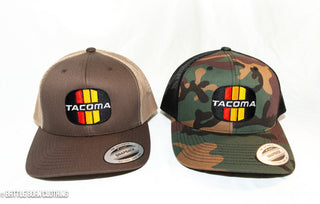
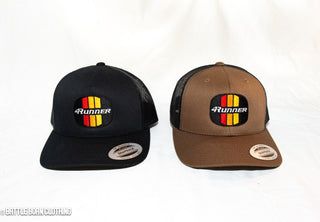
1st-Gen Tacoma & 3rd-Gen 4Runner Heritage
Embroidered in Yerington, Nevada. No minimums. Same-day quotes on custom orders.
|
|||
|
|||
| Shop Tacoma Collection Shop 4Runner Collection |
Factory Specifications
| Specification | 3RZ-FE |
|---|---|
| Production years | 1994 to 2004 |
| Production plant | Toyota Kamigo Plant, Aichi, Japan |
| Displacement | 2.7L (2,693 cc) |
| Configuration | Inline-4, DOHC, 16-valve |
| Block material | Cast iron, deep-skirt |
| Head material | Aluminum alloy |
| Bore x stroke | 95 mm x 95 mm (square) |
| Compression ratio | 9.5:1 |
| Fuel delivery | Multi-port EFI with ESA ignition |
| Valvetrain | Timing chain, scissors-gear exhaust cam |
| Crankshaft | Forged steel, 8 counterweights |
| Connecting rods | Shot-peened forged carbon steel |
| Balance shafts | Twin gear-driven, crankcase-mounted |
| Horsepower | 150 hp at 4,800 rpm |
| Torque | 177 lb-ft at 4,000 rpm |
| Firing order | 1-3-4-2 |
| Engine weight | 381 lb (173 kg) |
The "square" bore-and-stroke dimension of 95 mm x 95 mm is notable. Most Toyota truck engines are undersquare (stroke longer than bore) to emphasize low-end torque. The 3RZ-FE's even ratio is part of why it revs more willingly than the old pushrod 22R while still pulling respectable torque.
Which Toyota Vehicles Used the 3RZ-FE?
| Vehicle | Years | Notes |
|---|---|---|
| Toyota Tacoma (1st Gen) | 1995 to 2004 | Base 4-cylinder trim. V6 3.4L 5VZ-FE was the upgrade. |
| Toyota T100 | 1995 to 1998 | Full-size pickup that preceded the Tundra in North America. |
| Toyota 4Runner (2nd Gen, N120-N130) | 1995 | Final year of 2nd-gen 4Runner, 4-cylinder base trim. |
| Toyota 4Runner (3rd Gen, N180) | 1996 to 2000 | Base 4-cylinder trim. Ran alongside 5VZ-FE V6. |
| Toyota Hilux | 1997 to 2004 | International markets. Replaced earlier 22R-E Hilux engines. |
| Toyota Land Cruiser Prado (J90) | 1996 to 2002 | International markets. The "J90 Prado" 4-cylinder variant. |
| Toyota HiAce | 1998 to 2004 | Japanese-market commercial van. |
For the V6 companion that ran alongside the 3RZ-FE in the first-generation Tacoma and third-generation 4Runner, see our Toyota 5VZ-FE 3.4L V6 guide. For the bigger 4Runner story, read Toyota 4Runner evolution.
Horsepower: The Elephant in the Room
Let's address it directly. 150 horsepower in a 4,000-pound Tacoma is not fast. The 3RZ-FE was never designed to be fast. It was designed to be reliable, efficient, and torque-rich at low revs for real work. Owners who bought a 2.7L first-gen Tacoma typically wanted the 4-cylinder fuel economy and the lower insurance premium, not a racing truck.
What the 3RZ-FE delivers instead: 177 lb-ft of torque available from low in the RPM range, 25+ mpg highway in a manual-transmission Tacoma, and 250,000+ miles of service life with routine maintenance. For Toyota pickup buyers in the 1990s and early 2000s, that trade was worth it.
The Valve Adjustment Issue
This is the single most important maintenance item for the 3RZ-FE, and the one most owners skip. The engine uses a shim-over-bucket valvetrain with no hydraulic lash adjusters. That means valve clearances gradually tighten over time as the valve seats wear into the head, and they need to be checked and adjusted on a regular interval.
Toyota's official interval is every 25,000 to 30,000 miles. In practice, most owners go much longer without a check, and most get away with it. Until they don't.
Why Valve Adjustment Matters on the 3RZ-FETight valve clearances mean the valves cannot fully seat when they close. When that happens:
A $200 valve adjustment prevents a $2,000+ head rebuild. Skip it at your own risk. |
Valve clearance specs (cold engine): intake 0.15 to 0.25 mm, exhaust 0.25 to 0.35 mm. The job requires feeler gauges, the ability to measure and replace shims, and patience. Most DIY 3RZ-FE owners handle it in a weekend. Professional valve adjustments typically run $200 to $400 depending on how many shims need to change.
Other Known Issues
Beyond valve adjustment, the 3RZ-FE is one of the most reliable engines Toyota has ever produced. Common issues reported across TacomaWorld, Yotatech, and owner communities:
- Timing chain stretch. Toyota's interval is 150,000 miles. In practice, check condition at 100,000 to 120,000 miles. Symptoms: cold-start rattle, check engine light with timing codes. Replacement job is straightforward but labor-intensive.
- Water pump failure. Driven by the serpentine belt. Some fail at 75,000 miles, others last 300,000. Replace proactively during major service rather than wait for overheat.
- Balance shaft bearing wear. Uncommon but expensive. Some owners choose to delete the balance shafts during a rebuild. Deletion saves money but adds vibration.
- Serpentine belt replacement. Routine service item, lasts about 100,000 miles. Not a failure but worth tracking.
- Head gasket (overheat-induced). The engine does not have a head gasket problem the way the 1FZ-FE does. But once overheated, the gasket will fail. Every teardown of a dead 3RZ-FE starts with a coolant event.
- Spark plug wells filling with oil. Aging valve cover gaskets seep oil into the spark plug tubes. Easy fix with a new gasket set.
None of these are show-stoppers. The cast-iron block and forged bottom end are nearly bulletproof. The engine does not fail from internal wear. It fails from external events (overheat, oil starvation) or from skipped maintenance.
"It's a testament to Toyota's engineering and shows how the brand made a drivetrain that runs longer than many of its competitors. Even if it isn't that powerful of an engine, the 3RZ-FE is as reliable as people say."
-- Alex Hevesy, writing for SlashGear, analyzing a 300,000-mile 3RZ-FE teardown
That teardown, documented on the I Do Cars YouTube channel, showed a 3RZ-FE pulled from a 2002 Tacoma at over 300,000 miles. Internal wear was minimal; the engine came down from a blown head gasket caused by an overheat event, not from the bottom end giving up. For the technical specs side, the Toyota RZ engine family page on Wikipedia and the detailed breakdown at engine-specs.net are the two most reliable community references.
3RZ-FE Upgrade Paths
Performance is the 3RZ-FE's weakest area, and it is the most common reason owners look at modifications. Three realistic paths:
| Path | Target Output | Trade-offs |
|---|---|---|
| Naturally aspirated bolt-ons | 170 to 180 hp | Cold air intake, headers, cat-back exhaust, ECU tune. Diminishing returns for the cost. |
| Turbo kit (Garrett T3/T04B) | 220 to 250 hp | Stock internals handle 7 PSI. Best power-per-dollar path. |
| TRD supercharger kit | 225 hp | Factory TRD solution with good reliability. Kit availability has declined over the years. |
| V6 swap (5VZ-FE or 1GR-FE) | 180 to 240 hp | Significant labor and cost. Better long-term power ceiling than forced-induction 3RZ. |
The honest answer most experienced Toyota enthusiasts will give: if you need more power, buy a Tacoma or 4Runner that already came with the 5VZ-FE V6 from the factory. The 3RZ-FE is ideal if you value the specific 4-cylinder combination of fuel economy, simplicity, and reliability. It is not ideal as a platform for chasing horsepower. For owners cross-shopping the inline-six Land Cruiser platform instead, see our 1FZ-FE engine guide for the 80-series option with more displacement and torque.
3RZ-FE vs 5VZ-FE: Which Should You Buy?
This is the most common question on first-gen Tacoma forums. Both engines came in the same truck. Here is the honest comparison:
| Factor | 3RZ-FE (2.7L I4) | 5VZ-FE (3.4L V6) |
|---|---|---|
| Horsepower | 150 hp | 190 hp |
| Torque | 177 lb-ft | 220 lb-ft |
| Fuel economy (hwy) | 22 to 25 mpg | 18 to 20 mpg |
| Timing component | Chain | Belt (90K interval) |
| Valve adjustment | Every 25 to 30K miles | Every 60K miles |
| Towing capability | 3,500 lbs | 5,000 lbs |
| Parts availability | Excellent | Excellent |
| Insurance/running costs | Lower | Slightly higher |
Pick the 3RZ-FE if you want maximum fuel economy, rarely tow, and prefer the simplicity of a timing chain over a belt. Pick the 5VZ-FE if you tow, haul, or want the power headroom for a modestly-modified build.
Buying a 3RZ-FE Tacoma or 4Runner: What to Check
- Valve adjustment history. Ask when it was last done. If the answer is "never," plan for the job. Listen for valve tick at idle as a warning sign.
- Timing chain noise. Cold start rattle that persists after 10 to 15 seconds suggests a stretched chain or worn tensioner.
- Frame rust. First-gen Tacomas are famous for frame rot. Inspect the rear section, cab mounts, and leaf-spring hangers. Toyota issued a major frame recall on these trucks.
- Coolant condition. Clean coolant, no oil film, no rust. A past overheat often shows up here.
- Oil at the spark plug tubes. Pull the valve cover bolts or peek around the tubes. Oil pooling means worn gaskets, easy fix.
- Transmission condition. R150F 5-speed manual is robust. A340E 4-speed automatic is generally reliable but some units can develop shift issues at high mileage.
- 4WD transfer case (if equipped). Engage and disengage 4H and 4L during the test drive. Should click in cleanly without grinding.
Where the 3RZ-FE Fits in Toyota's 4-Cylinder Lineage
The 3RZ-FE sits exactly in the middle of Toyota's four-cylinder truck engine progression. Here is the full family tree for North American Tacoma, 4Runner, and pickup applications:
| Engine | Era | Peak Power |
|---|---|---|
| 22R / 22R-E 2.4L | 1981 to 1995 | 116 hp |
| 3RZ-FE 2.7L (this guide) | 1994 to 2004 | 150 hp |
| 2TR-FE 2.7L | 2004 to 2015 | 159 hp |
| I-Force 2.4L Turbo | 2024 to present | 278 hp |
| I-Force Max Hybrid | 2024 to present | 326 hp combined |
The V6 path ran alongside this lineage with the 3VZ-E, 5VZ-FE 3.4L, and modern 1GR-FE / 2GR-FKS engines. For a larger picture of the truck these engines power, read our Hilux and Tacoma deep-dive, our 3rd vs 4th gen Tacoma comparison, and our best Tacoma for overlanding guide.
Wear the Heritage
1st-gen Tacoma and 3rd-gen 4Runner owners are one of the most loyal communities in Toyota enthusiast culture. Battle Born Clothing produces apparel for exactly this crowd, embroidered and screen printed in-house in Yerington, Nevada. No minimums, same-day quotes on custom orders, and every piece built to outlast the truck it represents.
|
Shop The Gear
Built for 3RZ-FE Owners
Tacoma and 4Runner heritage caps, embroidered in Nevada.
|
|||
|
|||
| Shop Tacoma Collection Shop 4Runner Collection |
Looking for more? The Printed Retro 4Runner Hat and Vintage Toyota Tacoma Off-Road Stripe Tee are two of our top-selling pieces for this crowd. Or browse the full Toyota hats collection for every TRD, TEQ, 3-bar, and heritage design in the lineup.
Frequently Asked Questions
The Bottom Line
The 3RZ-FE is the four-cylinder engine for owners who understand that reliability and low cost-per-mile outrank peak horsepower. It is not fast. It was never going to be fast. What it is is the engine that bridged the 22R-E's pushrod simplicity to the modern turbocharged I-Force era, and did it without breaking the chain of Toyota's reliability reputation. If you own a 1st-generation Tacoma, a 3rd-generation 4Runner, or a T100 with this engine, you have one of the most durable four-cylinders Toyota has ever built. Keep the valves in spec, keep the cooling system healthy, and it will outlast the rest of the truck.
Born in Nevada. Built for the Grind.